We live, work, and socialize in a hyper-connected world.The world’s growing reliance on electronics, the Internet, computer systems and devices, and digital infrastructure has ushered in a new age of battle. From skirmishes such as we witnessed recently between pro-Palestinian supporters and Israel to the discovery of cyber espionage activities that have gone on undetected for years, the way we view conflict has changed forever.
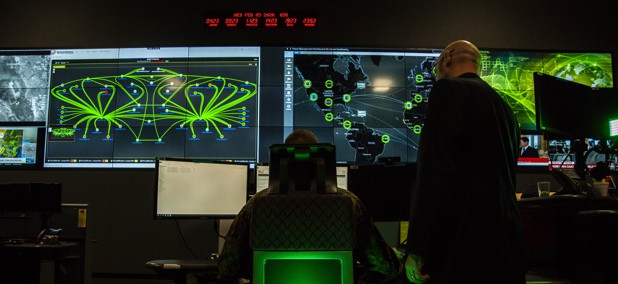
We have entered the age of conflict where intelligence agencies, and also the militaries of countries around the world, struggle to adapt to the requirements of this rapidly changing domain. The rapid development and availability of cyber weapons to criminals, terrorists and rogue nation states are without question a significant cause of concern for businesses, governments and militaries, which are are busy crafting the defense strategies and doctrine for cyber response.
The rapid evolution of cyber threats requires flexibility. Perhaps the most difficult adaptation is to the pace at which all the activities associated with cyber espionage and cyber intelligence collection, analysis and dissemination occurs, and also the pace that cyber weapons are created, evolve and adapt to our defensive needs. This is only rivaled by the pace with which a cyber weapon strikes. After all, the bits and bytes of malicious code used to create a cyber weapon travels at light speed through fiber optic cables. It is difficult to think of an aspect of modern life that is not directly reliant on this infrastructure. It is that reliance that has made cyberattacks such a huge challenge and risk.
Posted on Jan 26, 2012 at 2:04 PM0 comments
Israel saw two organizations that are components of its critical infrastructure struck Jan. 16 by cyberattacks. Websites belonging to Israel’s stock exchange and its national airline, El Al, went down around mid-morning, a result of another cyberattack by pro-Palestinian hackers. The hacker group that calls itself Nightmare has taken responsibility for the cyberattacks. There are reports that the group was so bold as to inform Ynet, Israel's largest and most popular news and content website, as to its plans in advance of the cyberattack.
At the same time, a hacker known as Hannibal is said to have published on Facebook the account details of some 20,000 Arab users. He also claimed to possess information that can be used to breach the bank accounts of some 10 million people in Iran and Saudi Arabia. He threatened to cause billions of dollars in damage with this information.
All of this playing out in a very public setting and taking place as Hamas has reportedly urged its supporters to boost the “electronic war against occupation” (that is, to escalate cyberattacks against Israeli targets). Cyber hostilities in the Middle East are on the rise. As they continue on this path, a kinetic exchange becomes more and more likely.
The Bloomberg News Service has reported that Sami Abu Zuhri, a senior spokesman for the Palestinian political party Hamas, has stated that “penetrating Israeli websites means opening a new field of resistance and the beginning of an electronic war against Israeli occupation.”
Posted on Jan 19, 2012 at 12:54 PM0 comments
Defense Secretary Leon Panetta’s comments during a recent interview with CBS News have certainly gotten attention. He talked about “paralyzing our financial systems,” “bringing down our power grid” and “paralyzing the country.” These are strong warnings to be sure. He went on to say we need to “be prepared to be able to be aggressive when it comes to cyber efforts.” This was music to the ears of some defense contractors; that is, to those involved in cyber.
Here are the top cyber threat predictions for 2012:
- -Cyberattacks in 2012 are expected to focus on mobile devices (source: McAfee).
- -Global spending on cyber warfare for 2012 is estimated at $15.9 billion (source: Visiongain).
- -Cyberattacks targeting specific organizations in specific industries are expected (source: Symantec).
- -Cyber threat intensity increased 2.6 times in 2011 and is expected to grow faster in 2012 (source: Technolytics).
- -Cyber espionage will dominate corporate and national information security landscapes this year (source: Panda Labs).
Analysis of the five cyber threat predictions paints a bleak picture for cybersecurity in 2012. The threats seem extremely challenging, if not a bit overwhelming. We are seeing the modernization of armed conflict and, at this point, there are more questions than answers.
The administration’s budget cuts have had a minimal effect on the funding for the U.S. cyber warfare capabilities; however, it is clear that the sheer number of cyber adversaries coupled with the massive number of sole practitioners involved in vulnerability identification and sale combine to challenge the U.S. military’s operational abilities to defend against the increasing frequency and sophistication of cyberattacks.
Posted on Jan 12, 2012 at 2:04 PM0 comments
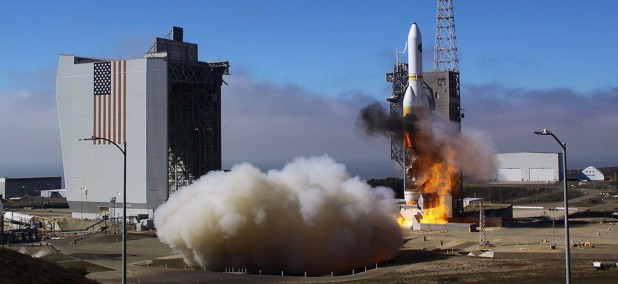
A number of references lately compare cyber weapons with the nuclear arms race of the Cold War. Although our recent cyber situation and what we experienced during nuclear weapons development each represent an arms race, that is where the similarities end. Consider this; the latest threat intelligence on nuclear weapons shows that even with some being dismantled in 2010, there are still more than 22,000 total nuclear warheads in the world owned by nine different countries.
Cyber threat analysis indicated that with the average the malware proliferation in 2010, the creation of 22,000 cyber weapons would take only 2.5 hours to create compared with the years it took to develop the current number of nuclear weapons.
Nuclear warhead owners
- Russia
- United States
- France
- China
- United Kingdom
- Israel
- Pakistan
- India
- North Korea
According to version 3.0 of the Cyber Commander’s eHandbook, nearly 180 countries have cyber weapons along with more than a dozen terrorist groups as well as a number of criminal organizations. Think about the massive infrastructure needed to develop a nuclear weapon and also a rocket to move the warhead from launch point to its intended target. Now consider the infrastructure needed to develop a cyber weapon, which is next to nothing. Nuclear weapons require highly enriched uranium, in contrast to cyber weapons that require no restricted or exotic materials. Finally, compare the cost of developing nuclear weapons versus the cost of developing cyber weapons. The U.S. nuclear weapons program spent $5.8 trillion between the early 1940s and 1996 alone. An ad that appeared on a hacking board stated 24-hour distributed denial-of-service of any website for $599 – what a bargain.
There is no comparison. The broad availability of cyber weapons and their modest cost clearly differentiate the cyber arms race from what we experienced in the Cold War. It is time we treat this for what it is – something new and different.
Posted on Jan 05, 2012 at 2:04 PM1 comments